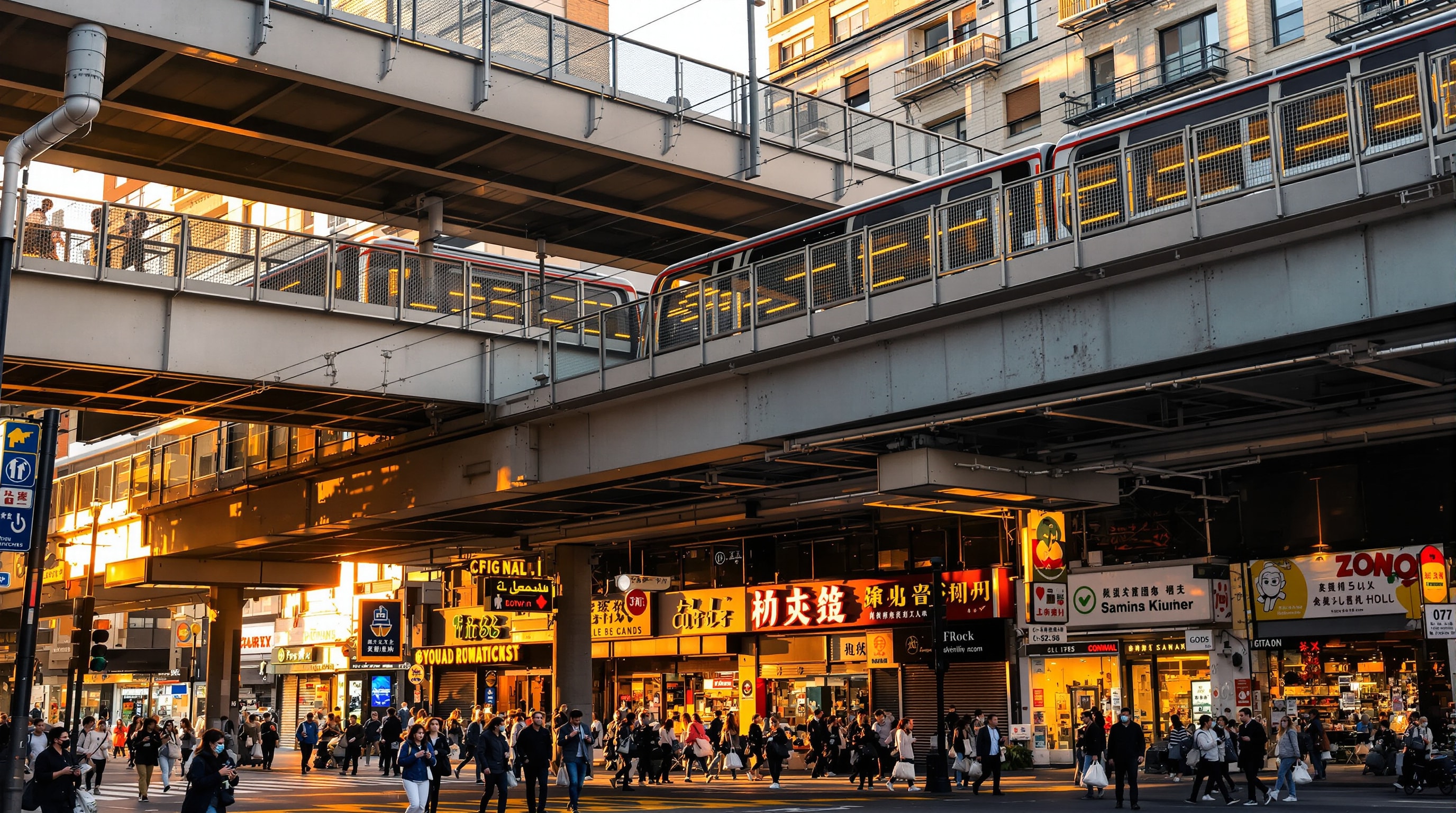
Jamaica is the geographic and transit heart of southern Queens. As one of the borough's oldest established neighborhoods and the site of one of the busiest transit hubs in the New York metropolitan area, Jamaica plays a unique role in the Queens housing market. Understanding Jamaica requires understanding both its historic character and its ongoing transformation.
Location and Transit
Jamaica sits in the south-central part of Queens, bounded by Hollis to the northeast, St. Albans to the east, Springfield Gardens to the south, and South Ozone Park and Ozone Park to the west. Its transportation hub status is unparalleled in the outer boroughs:
- LIRR Jamaica Station: One of the busiest stations on the Long Island Rail Road, providing direct service to Penn Station and direct connections to most LIRR branches.
- AirTrain JFK: Direct rail connection to JFK International Airport, making Jamaica uniquely attractive to frequent travelers.
- Subway: E, J, and Z trains all terminate at Jamaica Center — Parsons/Archer, providing express service to Midtown Manhattan.
- Bus network: Multiple MTA bus routes serving Queens and connecting to Brooklyn.
Housing Market Overview
Jamaica's housing stock is predominantly single-family detached and semi-detached homes built in the early-to-mid 20th century, with significant numbers of two-family homes throughout the neighborhood. The residential streets of Jamaica proper, Jamaica Estates, and Jamaica Hills offer very different experiences:
- Jamaica (core): Primarily attached and semi-detached homes; entry-level prices relative to the rest of Queens; active buyer demand driven by transit access.
- Jamaica Estates: The most prestigious sub-neighborhood, featuring large detached single-family homes on substantial lots; significantly higher price points; more suburban character within an urban borough.
- Jamaica Hills: Hillside location with mixed housing types; good transit access; prices generally between Jamaica proper and Jamaica Estates.
Typical single-family homes in Jamaica range from approximately $400,000 for attached rowhouses to $700,000+ for well-maintained detached homes. Two-family properties can command similar or higher prices based on rental income potential.
Schools and Education
Jamaica falls within New York City's Community School District 29, which serves much of southeastern Queens. As with all NYC public schools, you can explore options through the NYC Department of Education's school finder. High school choices include both zoned options and competitive specialized and screened programs across the city.
Community Character
Jamaica has a rich African American cultural history stretching back many decades, and the neighborhood remains an important community anchor for southeastern Queens. Downtown Jamaica has undergone significant investment in recent years, with new developments near the transit hub bringing retail, hotel, and mixed-use projects to the area. The neighborhood's diversity continues to evolve, with Caribbean, Latino, and South Asian residents adding to a longstanding African American majority in many blocks.
Buying in Jamaica: What to Know
- Many Jamaica homes are row houses or attached homes sharing walls with neighbors — inspect shared walls, roofs, and driveways carefully.
- Two-family homes are common; verify that any rental unit has a valid certificate of occupancy before purchase.
- The area around the downtown transit hub is in flux — research active development projects that could affect the character of blocks near your target property.
- Jamaica property taxes vary significantly by property class; consult the NYC Finance Department for current assessed values.
Nearby Neighborhoods
Also consider: Hollis (northeast, similar single-family market), St. Albans (east, established community), South Ozone Park (west, more affordable).