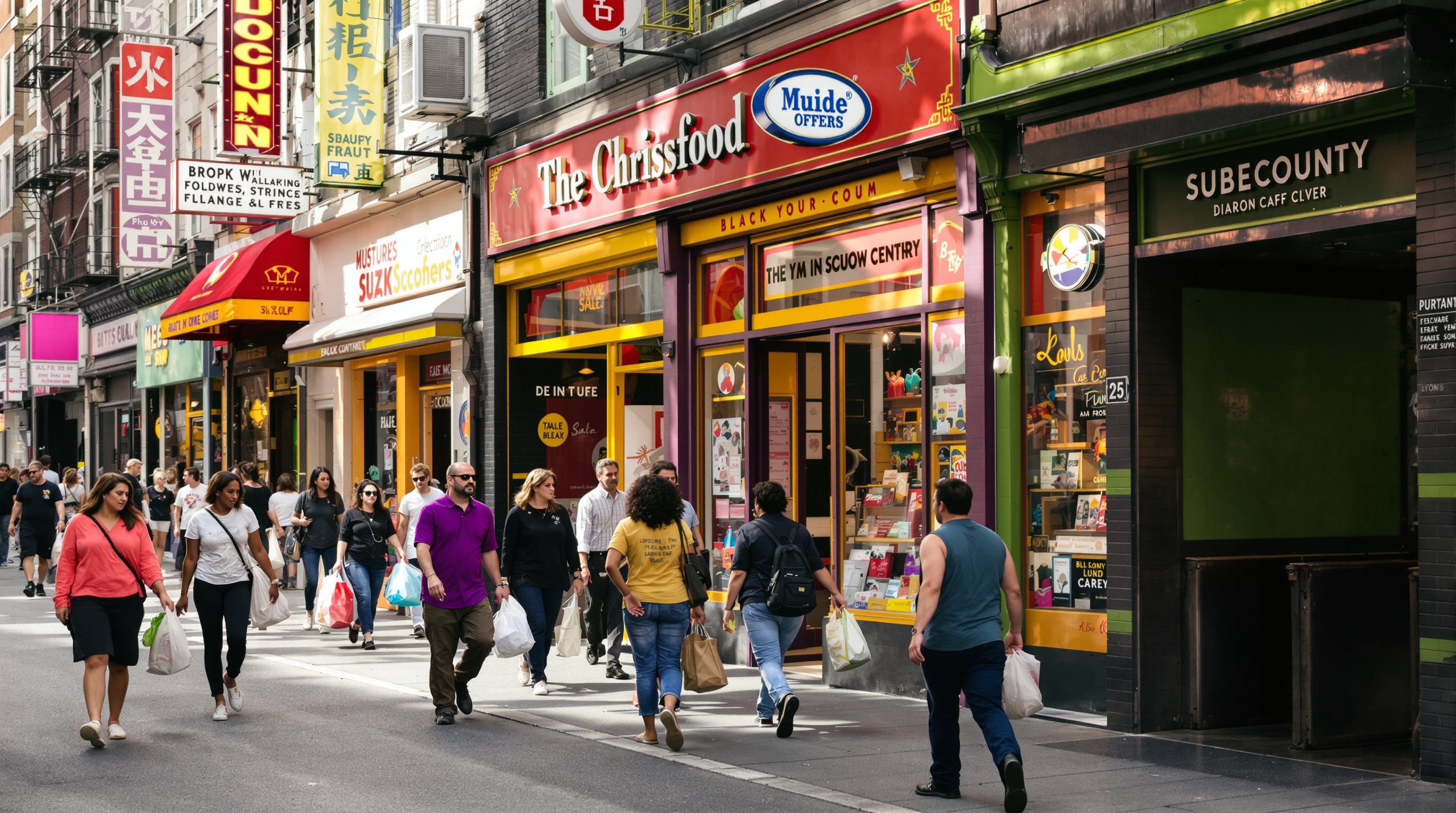
Flushing is one of the most dynamic neighborhoods in Queens — a major commercial and transit center anchored by a downtown so busy it rivals many American city cores. Home to the largest Chinatown outside of San Francisco and a deep bench of Korean, Chinese, and other East Asian communities, Flushing combines exceptional food, robust real estate demand, and a location that connects easily to both Manhattan and Long Island. For buyers, it offers everything from dense downtown condos to quiet residential blocks on its edges.
Location and Layout
Flushing occupies north-central Queens, roughly bounded by Whitestone and College Point to the north, Bayside and Auburndale to the east, Kew Gardens Hills and Pomonok to the south, and Corona and Flushing Meadows–Corona Park to the west. The downtown core clusters around Main Street and Roosevelt Avenue, one of the busiest intersections in the city, while the surrounding areas — such as Murray Hill, Broadway–Flushing, and the blocks near Kissena Park — are quieter and more residential.
Housing Market
Flushing's housing stock ranges widely. The downtown and its immediate surroundings have seen extensive new construction, producing a large supply of modern condominium units and mixed-use buildings. Beyond the core, the neighborhood offers pre-war and post-war co-op apartments, attached and semi-detached homes, and — in areas like Broadway–Flushing — larger single-family houses on generous lots. This variety means Flushing serves first-time condo buyers, families seeking a house, and investors drawn by the neighborhood's strong rental demand.
Because of intense demand and its status as a commercial hub, Flushing pricing tends to be firm, especially for new condos near the transit center and for detached homes in the northern residential sections. Co-ops generally provide the most accessible ownership entry point. Values vary sharply between the bustling downtown and the tree-lined blocks farther out.
Transportation
Flushing is a transit powerhouse. The 7 train terminates at Flushing–Main Street, offering a direct ride to Midtown Manhattan, and the station is consistently one of the busiest in the entire subway system outside Manhattan. The LIRR Port Washington Branch stops at Flushing–Main Street as well, along with nearby Broadway, Murray Hill, and Auburndale stations, giving commuters a faster option to Penn Station and Grand Central. An extensive network of local and express buses radiates from downtown Flushing across northern and eastern Queens.
Schools
Flushing falls within NYC Community School District 25, which has a strong reputation and includes several sought-after zoned schools. As with all NYC public schools, options include zoned, district, and citywide programs. Explore current zoning and enrollment through the NYC Department of Education's school finder before settling on a specific block, since school zones can change.
Community Character
Flushing is one of the most vibrant and internationally connected neighborhoods in the country. Its downtown is a destination in its own right — famous for its food halls, restaurants, and markets — and its cultural life is shaped by large Chinese and Korean communities alongside longstanding residents of many backgrounds. Just to the west, Flushing Meadows–Corona Park offers hundreds of acres of green space, sports facilities, and cultural institutions. The neighborhood's blend of round-the-clock commercial activity and quiet residential enclaves is unusual even by Queens standards.
What Buyers Should Know About Flushing
- New condo developments come to market frequently — research the sponsor, building financials, and any tax abatement status before committing.
- Co-op buildings require board approval and have their own rules; review our co-op vs. condo guide and the building's financials carefully.
- Downtown blocks are dense and busy; residential streets farther out are calmer — decide which environment fits your lifestyle and visit at different times.
- Portions of the area near Flushing Creek have flood exposure; check FEMA flood maps for any property you are considering.
- Review a property's tax and sales history through NYC ACRIS before you buy.
Nearby Neighborhoods
Also consider: Forest Hills (south, co-op towers), Rego Park (southwest, dense residential), and Bayside to the east.