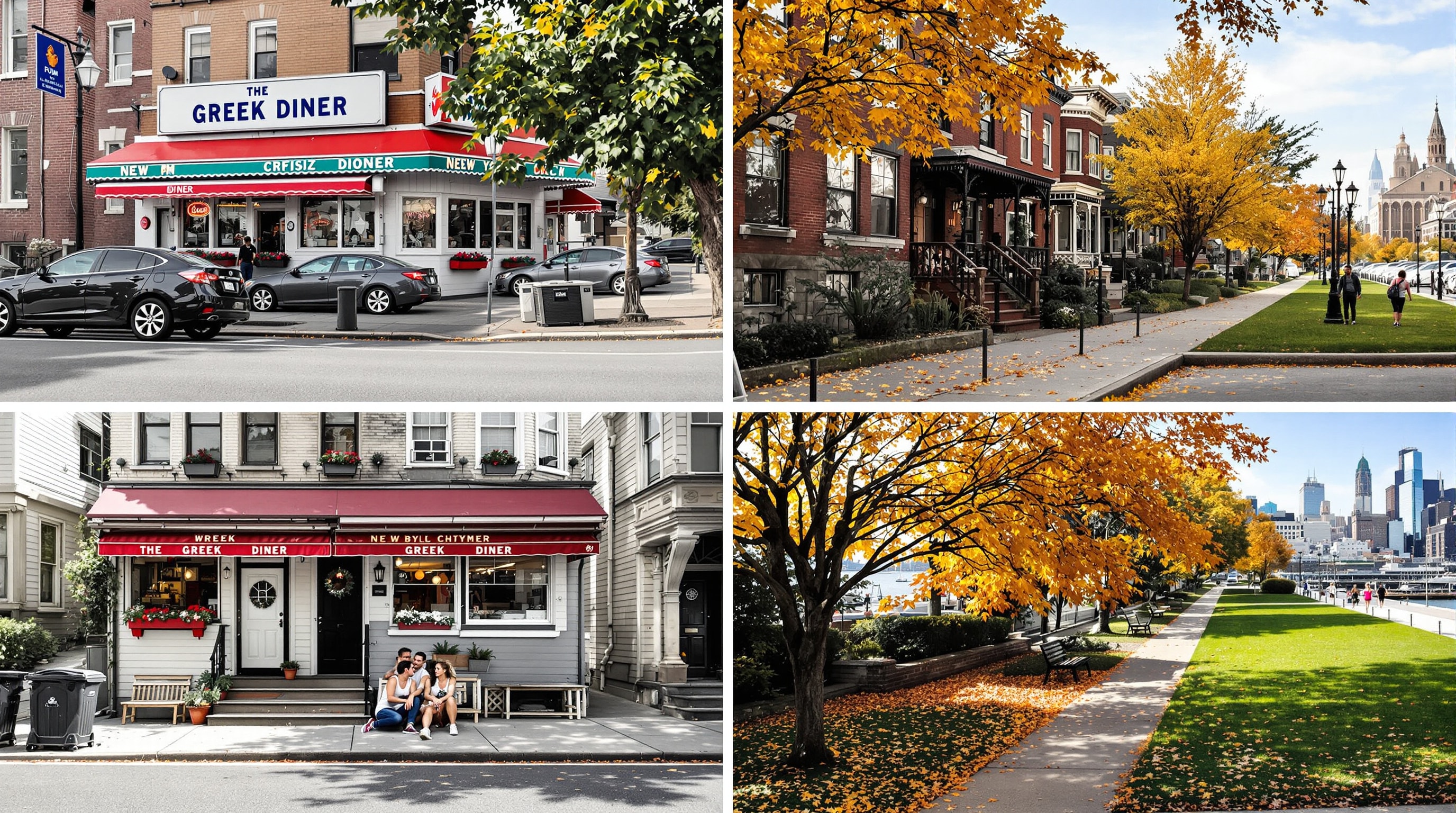
Rego Park is a densely built, conveniently located neighborhood in central Queens, sitting just west of Forest Hills and sharing much of its character. Known for its many co-op and apartment buildings, its excellent shopping, and its easy transit access, Rego Park offers a practical, well-connected place to live at prices that are often a step more attainable than its more famous neighbor. It's a popular choice for buyers who want apartment living with everyday convenience.
Location and Character
Rego Park lies in central Queens, bordered by Elmhurst to the west, Forest Hills to the east, Corona and Flushing Meadows to the north, and the area near Woodhaven Boulevard to the south. Queens Boulevard and 63rd Drive are its principal commercial corridors, and the neighborhood is home to major shopping destinations that draw customers from across central Queens. The name derives from an early-20th-century development company, and the neighborhood grew into a dense residential district anchored by mid-rise and high-rise apartment buildings.
Housing Stock
Rego Park is predominantly an apartment neighborhood, with a large stock of co-operative buildings ranging from pre-war walk-ups to substantial post-war towers along and near Queens Boulevard. Condominiums are present but less common than co-ops, and there are also pockets of attached and single-family homes — including some larger houses in the quieter southern section sometimes called Rego Park proper or "Crescents." This mix gives buyers options from entry-level co-ops to more spacious homes, though the neighborhood's identity is firmly tied to apartment living.
Co-ops in Rego Park generally offer good value relative to Forest Hills next door, making the neighborhood attractive to first-time buyers and downsizers alike. Single-family homes, where available, command higher prices. As with any co-op market, board approval and building financials are central to the buying process.
Transportation
Rego Park has convenient transit. The M and R subway lines serve the 63rd Drive–Rego Park and 67th Avenue stations along Queens Boulevard, connecting riders to Forest Hills, Long Island City, and Manhattan. The Woodhaven Boulevard station nearby adds further access, and multiple bus routes — including busy lines along Queens Boulevard and Woodhaven Boulevard — link the neighborhood to Flushing, Jackson Heights, and beyond. The neighborhood's central position also makes highway access straightforward for drivers.
Schools
Rego Park falls within NYC Community School District 28, which serves a swath of central Queens and includes several well-regarded schools. Options include zoned, district, and citywide programs. Confirm current zoning and enrollment for any specific building through the NYC Department of Education's school finder, since zones can change over time.
Community Character
Rego Park has a diverse, established population, with significant Bukharian, Russian-speaking, and other immigrant communities that have shaped its restaurants, markets, and civic life over recent decades, alongside longtime residents of many backgrounds. The neighborhood is practical and convenient rather than showy — a place defined by its shopping, its transit, and its dense residential blocks. Its proximity to Forest Hills and the parkland to the north gives residents easy access to both amenities and green space.
What Buyers Should Know About Rego Park
- This is a co-op-heavy market; expect board approval, financial review, and building-specific rules — see our co-op vs. condo guide.
- Review each building's financials, reserve fund, and any planned assessments, especially in older pre-war co-ops.
- Blocks along Queens Boulevard and near the malls are busy and commercial; interior streets are quieter — visit at different times of day.
- Confirm what maintenance charges cover and whether the building allows subletting if that matters to you.
- Check a property's tax and sales history through NYC ACRIS before you buy.
Nearby Neighborhoods
Also consider: Forest Hills (east, Tudor homes and co-op towers), Flushing (north, busy downtown), and Elmhurst to the west.