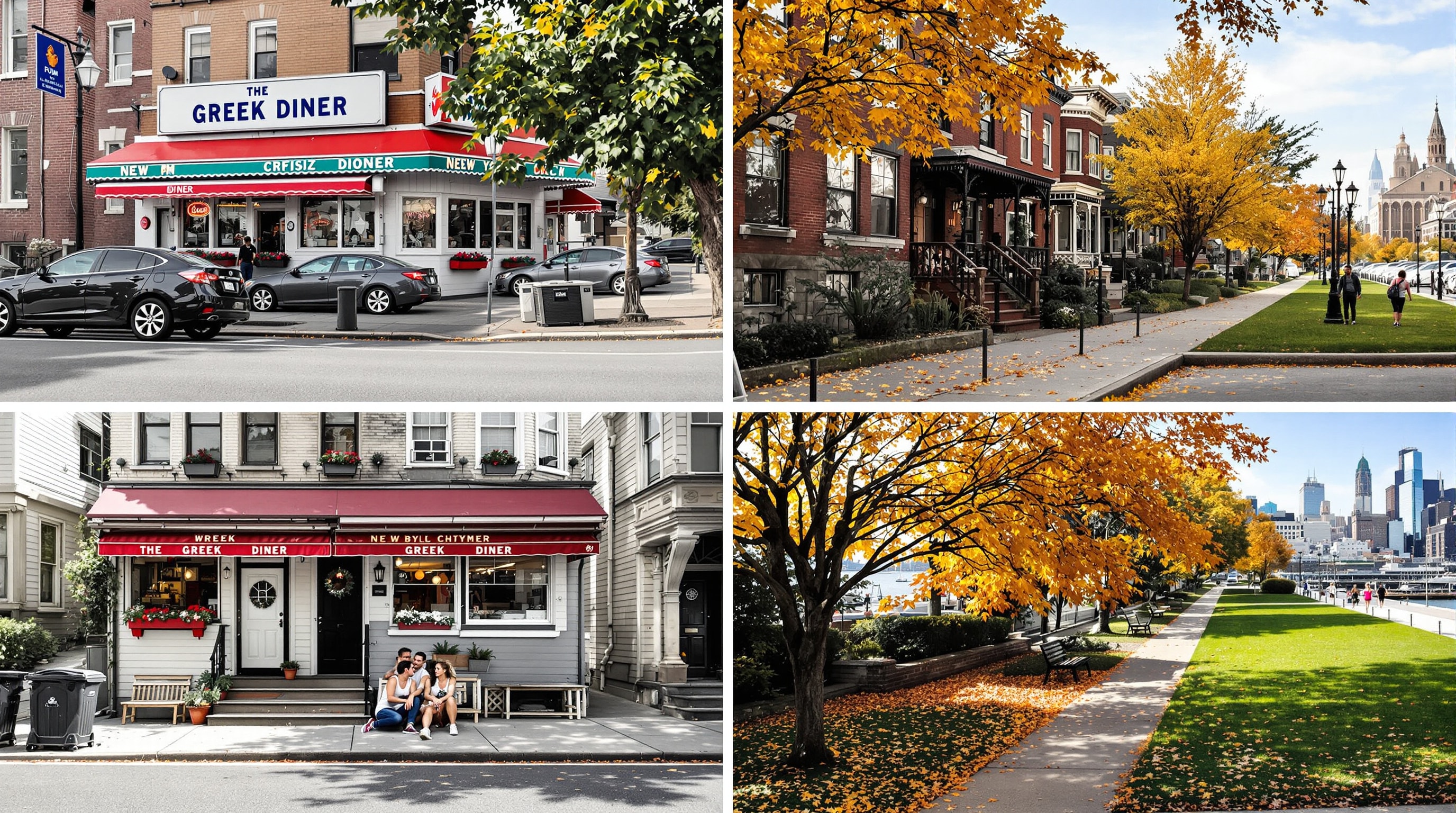
Forest Hills is one of the most desirable and enduring residential neighborhoods in Queens. Known for its picturesque Tudor architecture, its stately co-op towers along Queens Boulevard, and the landmark planned community of Forest Hills Gardens, it offers a refined, tree-shaded environment with excellent transit and a strong sense of permanence. For many Queens buyers, Forest Hills is the aspirational choice — a place that feels settled and green while remaining a quick ride from Manhattan.
Location and Character
Forest Hills sits in central Queens, bordered by Rego Park to the west, Kew Gardens to the south, and the parkland of Flushing Meadows to the north. Queens Boulevard cuts through the neighborhood as its main commercial spine, lined with pre-war and post-war apartment buildings and shops. Just south of the train station lies Forest Hills Gardens, a meticulously planned early-20th-century community of Tudor-style homes and private streets that remains one of the most distinctive residential enclaves in New York City. Austin Street offers a walkable stretch of restaurants and boutiques that functions as the neighborhood's downtown.
Housing Stock
Forest Hills offers a wide range of housing. The dominant type is the co-operative apartment — the neighborhood is famous for its large, well-maintained pre-war and post-war co-op buildings along and near Queens Boulevard. Condominiums exist but are less common than co-ops. Beyond the apartment towers, the neighborhood includes attached and detached single-family homes, and the Forest Hills Gardens section features some of the finest and most expensive houses in Queens. This mix means the neighborhood serves everyone from first-time apartment buyers to families seeking a substantial home.
Pricing in Forest Hills runs toward the higher end of the Queens market, particularly for houses in the Gardens and for larger co-ops with strong financials. Co-ops overall remain the most attainable path to ownership here, though buyers should be prepared for board approval and typically higher down-payment requirements.
Transportation
Forest Hills has excellent transit. The E, F, M, and R subway lines all serve the Forest Hills–71st Avenue station, with the E and F providing express service that reaches Midtown Manhattan quickly; the M and R also stop at nearby 67th Avenue and 75th Avenue. In addition, the LIRR's Forest Hills station on the Main Line offers a fast commuter-rail option to Penn Station and Grand Central. Multiple bus routes connect the neighborhood to the rest of central and northern Queens.
Schools
Forest Hills falls within NYC Community School District 28, which includes several well-regarded schools. Options span zoned, district, and citywide programs. For current zoning boundaries and enrollment procedures, consult the NYC Department of Education, and confirm the zone for any specific address, as boundaries can shift over time.
Community Character
Forest Hills has long attracted families, professionals, and longtime residents who value its blend of quiet residential streets and convenient urban amenities. The neighborhood has a rich history — its historic tennis stadium once hosted major championships and today serves as a popular concert venue — and Austin Street remains a lively, walkable commercial corridor. The overall feel is established and green, with a strong civic culture and a reputation for stability that helps housing values hold up well over time.
What Buyers Should Know About Forest Hills
- The market is co-op-heavy; be ready for board approval, financial review, and often higher down-payment requirements — see our co-op vs. condo guide.
- Homes in Forest Hills Gardens sit within a private association with its own rules and fees — understand these obligations before buying.
- Many co-op buildings are pre-war; review the building's financials, reserve fund, and any planned assessments carefully.
- Austin Street and Queens Boulevard blocks are busier and more commercial; interior residential streets are quieter — visit at different times of day.
- Check a property's tax and sales history through NYC ACRIS before making an offer.